
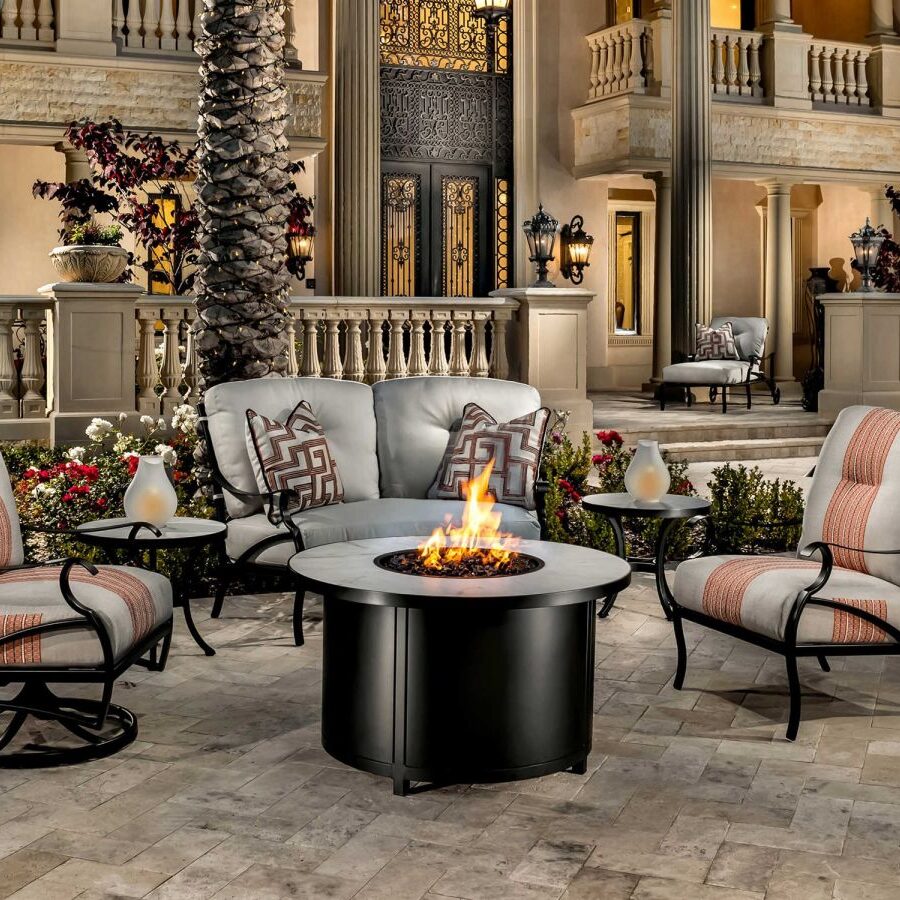
Choosing the Best Fire Pit for Colorado’s High-Altitude Climate
westernoutdoo12026-03-18T15:51:58+00:00Colorado’s stunning mountain views and crisp evenings make outdoor fire pits a must-have, but the state’s high altitude, cold temperatures, and frequent freeze-thaw cycles require thoughtful design and material selection. Choosing the right fire pit ensures long-term durability, consistent warmth, and year-round enjoyment.
Durable Materials Built for Colorado Weather
Colorado’s climate demands materials that can withstand snow, moisture, and temperature swings without cracking or corroding.
Recommended materials include:
- Concrete and natural stone (flagstone, bluestone): Exceptional durability and excellent heat retention.
- Powder-coated steel: Strong, weather-resistant, and ideal for modern designs.
- Stainless steel and copper: Naturally rust-resistant; copper develops a distinctive patina over time.
Stone and concrete fire pits are especially well-suited for permanent installations in Colorado landscapes, offering both longevity and timeless appeal.
Fuel Types That Perform at High Altitude
Thin air and cold temperatures can impact flame strength, making fuel choice critical.
- Natural gas and propane fire pits provide instant, reliable heat and perform well in windy or cold conditions.
- Wood-burning fire pits create a rustic atmosphere but require heavier construction and more maintenance to withstand moisture and freezing temperatures.
For most homeowners seeking convenience and consistent performance, gas fire pits are the preferred option at higher elevations.
BTU Output Matters
At higher elevations, fire pits require increased heat output to provide comfortable warmth.
- Look for high-BTU burners designed specifically for cold, high-altitude environments.
- Stronger flame output helps counteract wind and low temperatures, extending the outdoor season.
Design and Safety Considerations
Wind exposure is common throughout Colorado, making stability and construction quality essential.
- Permanent, heavy fire pits built from stone or concrete offer the best resistance to high winds.
- High-quality portable fire pits can also work when designed with weight, balance, and durability in mind.
- Proper installation and clearances are key for safety and long-term performance.
Fire Media: Fire Glass vs. Lava Rock
Both options are suitable, but durability differs.
- Fire glass is long-lasting, low-maintenance, and retains its appearance over time.
- Lava rock is more economical but may need replacement every one to two years due to cracking from heat and moisture.
Burner Technology for Mountain Environments
Burner quality plays a major role in flame consistency at elevation.
- Burners known for producing taller, fuller flames in windy or high-altitude conditions are an excellent choice for Colorado outdoor spaces.
Built for Colorado Living
A properly designed fire pit transforms outdoor spaces into comfortable gathering areas, even in colder months. By selecting weather-resistant materials, the right fuel type, sufficient BTU output, and high-performance burners, homeowners can enjoy warmth and ambiance throughout the year.
Designing a fire pit for Colorado’s climate requires more than choosing a style; it requires building performance. At Western Outdoor Living, we help create fire features designed to thrive in Colorado’s unique environment.